Avian flu confirmed in northern elephant seals at Año Nuevo — park viewing closed as scientists expand coastal surveillance
Seven weaned northern elephant seal pups at Año Nuevo State Park tested positive for highly pathogenic avian influenza H5N1, the first confirmed detection in northern elephant seals and any California marine mammal, prompting closure of seal viewing areas.
Key takeaways
- At least seven weaned northern elephant seal pups at Año Nuevo tested positive for HPAI H5N1
- Samples were screened at UC Davis’s California Animal Health and Food Safety Laboratory System and confirmed by the USDA National Veterinary Services Laboratory
- Año Nuevo State Park closed seal viewing areas and canceled guided tours
- Agencies expanding testing include UC Davis, UC Santa Cruz, NOAA Fisheries and state wildlife partners
Main coverage
Outbreak timeline and detection
On Feb. 19 and 20, researchers monitoring Año Nuevo observed animals with respiratory distress, weakness, tremors and seizures and reported sudden deaths during routine colony checks, according to long-form reporting on the detection. Field teams collected tissue and swab samples from sick and dead elephant seals.
Initial tests were run at UC Davis’s California Animal Health and Food Safety Laboratory System, which screened positive for avian influenza; the strain was then confirmed as HPAI H5N1 by federal labs, per media and lab statements.
Park response and public access
California State Parks temporarily closed public seal viewing areas at Año Nuevo and canceled guided elephant seal tours beginning Feb. 23. Officials cited public safety and the need to give sick animals space; the closure will remain while investigations continue.
“Park staff closed access to protect visitors, pets and the colony while testing and monitoring continue,” the agency said in a release.
Surveillance and interagency work
Scientists from UC Davis and UC Santa Cruz increased monitoring at Año Nuevo in the weeks before detection. Agencies now are expanding testing along the central coast from Sonoma to San Luis Obispo counties and coordinating with NOAA Fisheries, the California Department of Fish and Wildlife and the West Coast Marine Mammal Stranding Network to detect new cases quickly.
The multi-agency response aims to track spread, collect samples for lab confirmation and limit transmission between colonies and species.
Why this detection matters
HPAI H5N1 has circulated widely since 2020, infecting hundreds of bird species and more than 100 mammal species globally. The virus caused major die-offs in South American marine mammals, prompting scientists to watch for a jump into North American populations. This detection is notable because it is the first confirmed case in northern elephant seals and the first H5N1 detection in a California marine mammal, raising concerns about short- and long-term impacts to the species and coastal ecosystems.
Rapid detection by long-term monitoring programs and state labs is being credited with helping to limit what could have become a larger event.
Scope of illness and pending tests
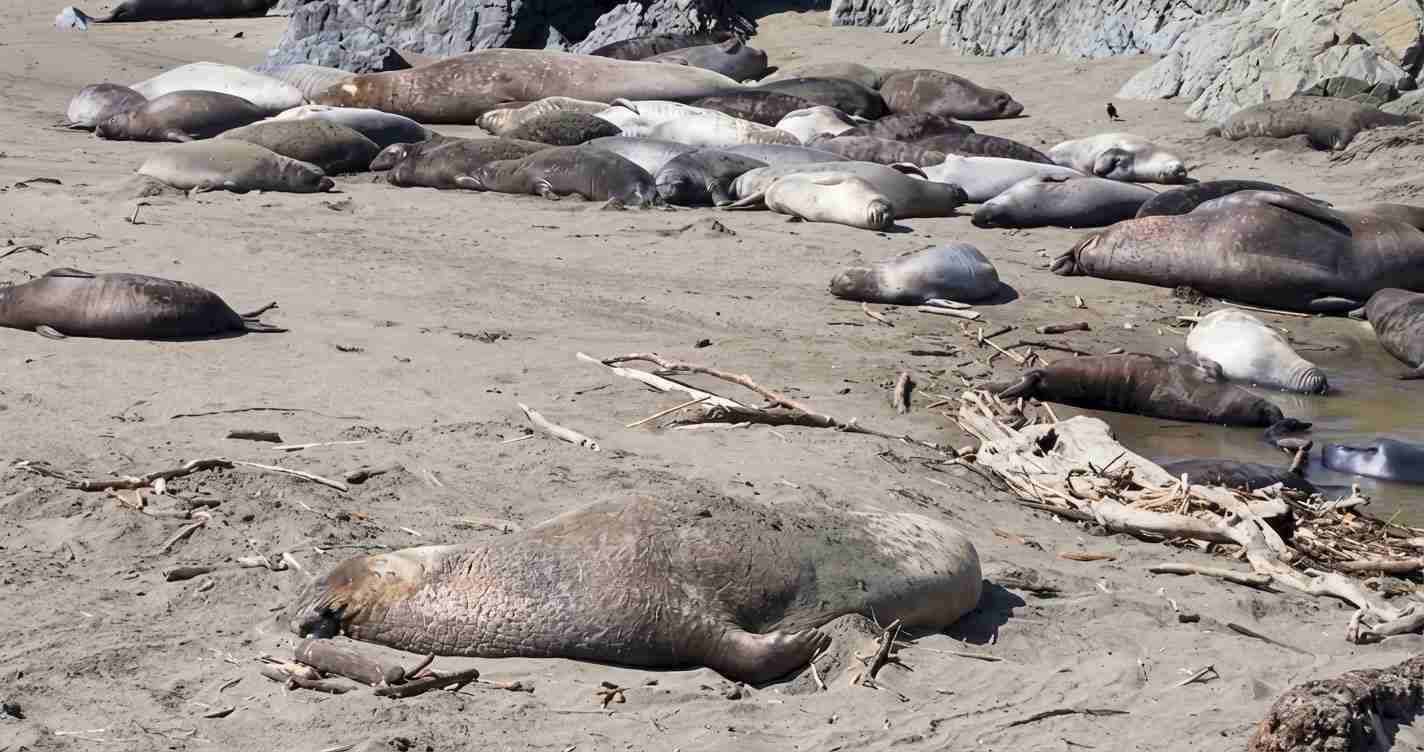
About 1,350 seals were on the beach when the outbreak began; the colony hosts roughly 5,000 seals during peak winter months. Park and lab reports show roughly 30 seals have died on or near the beach since illness was first observed, though not all deaths are lab-confirmed. At least seven weaned pups have tested positive so far; tests remain pending for samples from about 30 additional animals.
Officials emphasize many animals still appear healthy and noted that most adult females had already left for migration when the outbreak began, which may limit exposure.
Public health guidance and safety
State and federal health officials say the risk to the public is very low. Authorities advise:
- Do not touch live or dead seals, birds or other wildlife.
- Keep pets away from sick or dead animals and leashed near haul-outs.
- If you find a sick, injured or dead marine mammal in California, Oregon or Washington, call the NOAA Fisheries West Coast Region Stranding Hotline at (866) 767-6114.
- Report suspicious wildlife encounters and follow updates from California State Parks and the Monterey Bay National Marine Sanctuary.
Do not attempt to handle or move wild animals yourself.
Broader context: H5N1 and past die-offs
Since 2020, global reporting shows hundreds of bird species and many mammals infected by H5N1. Large die-offs in South America infected millions of wild birds and caused tens of thousands of marine mammal deaths, prompting expanded coastal testing in California beginning in 2024. Human infections have been rare overall, and there is no evidence of seal-to-human spread in this event to date.
Investigative notes on monitoring and research value
Año Nuevo is a long-running research site: UC Santa Cruz has tracked individual seals there for six decades. That record gives scientists a rare opportunity to study known individuals before and after exposure — enabling research on viral carriage, reproductive impacts, survival and possible immunity. UC Davis labs’ ongoing testing since 2024 helped confirm the virus rapidly.
Implications for California
Economic: The closure and canceled tours reduce park and local tourism revenue, affect guide income and hurt nearby businesses that rely on seasonal visitors.
Political and social: Officials must balance access and safety; the event may increase calls for more wildlife disease surveillance funding and stronger coordination among agencies. Clear public messaging is essential to prevent fear and maintain trust in science and stewardship.
Practical guidance for residents
- Do not touch seals or birds; keep dogs leashed and away from haul-outs.
- Report sick or dead animals to the West Coast Stranding Hotline at (866) 767-6114.
- Follow updates from California State Parks and the Monterey Bay research partners before planning visits.
Sources and further reading
- Mongabay coverage of the Año Nuevo detection
- CIDRAP report on California H5N1 in northern elephant seals
- California State Parks news release
- The Marine Mammal Center statement
- UC Davis Veterinary Medicine lab confirmation
- RSOE EDIS event details
- A Flu Diary — public health guidance
- Stocktonia local reporting
- Smithsonian Magazine overview
If you encounter a sick, injured or dead marine mammal in California, Oregon or Washington, call the NOAA Fisheries West Coast Region Stranding Hotline at (866) 767-6114. Do not touch or move wild animals.