Mojave Desert Land Trust begins design for two SR-62 wildlife overpasses with $5.5M state grant
Planning has begun for two wildlife overpasses on State Route 62 in the Mojave Desert, funded by a $5.5 million California Wildlife Conservation Board grant to MDLT to complete a three‑year design phase reducing collisions and reconnecting habitat.
Key takeaways
- Two overpasses planned: Morongo Grade and Yucca Grade on State Route 62 to improve connectivity and reduce wildlife-vehicle collisions.
- $5.5M design grant: California Wildlife Conservation Board funding covers about 65% of the three-year design phase.
- Partners: Mojave Desert Land Trust (MDLT) leading with Caltrans, Coachella Valley Conservation Commission and Mojave Desert Resource Conservation District.
- Next steps: Environmental review and construction funding still required after design completion (roughly through 2029).
Project overview
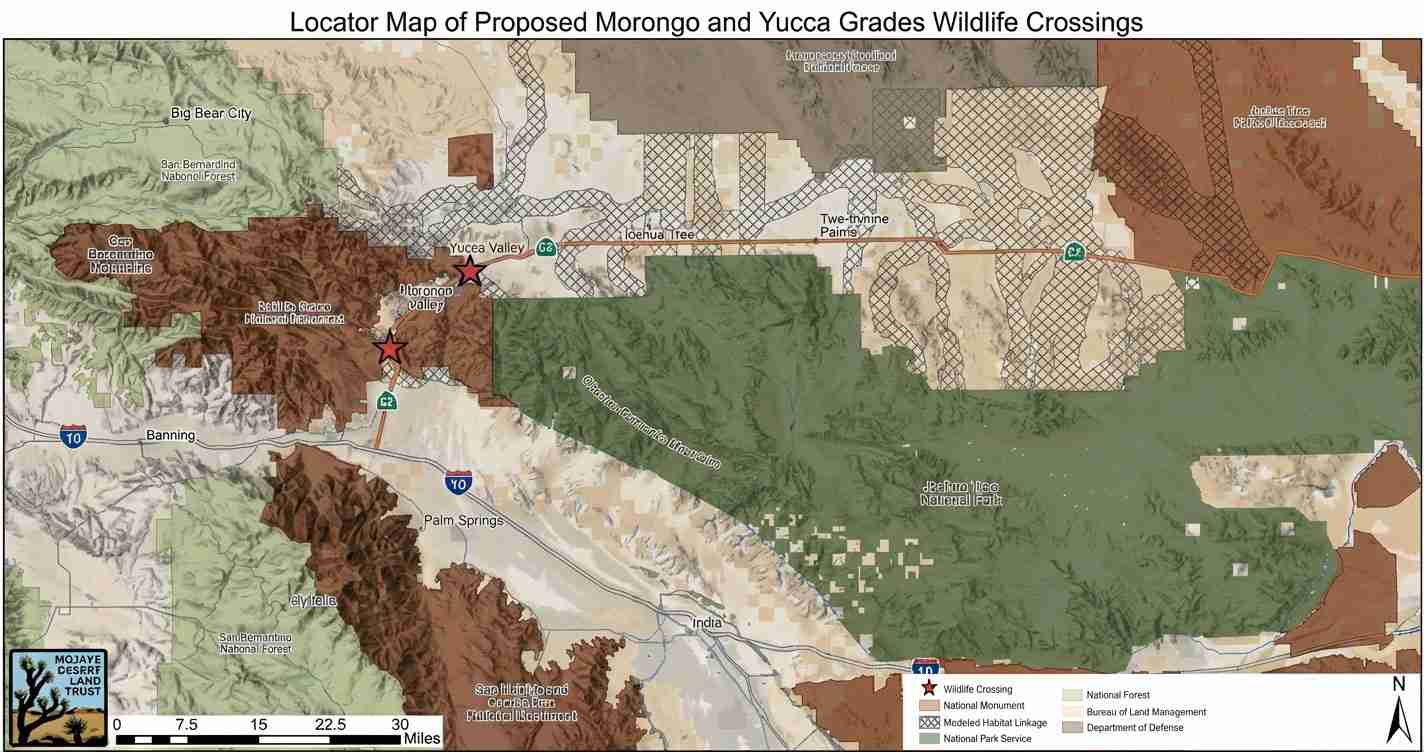
Project: Two wildlife overpasses on State Route 62 (SR-62) at Morongo Grade and Yucca Grade to reconnect habitat between the San Bernardino and Little San Bernardino ranges.
Lead nonprofit: Mojave Desert Land Trust (MDLT), headquartered in Joshua Tree, CA (founded 2006). MDLT notes it has protected about 125,000 acres in the Mojave and Colorado deserts.
Grant: A $5.5 million award from the California Wildlife Conservation Board will fund roughly 65% of the three-year design phase.
Partners and documentation
Project partners include Caltrans, the Coachella Valley Conservation Commission and the Mojave Desert Resource Conservation District. Primary project details are outlined in MDLT materials including the MDLT press release and MDLT’s main site at MDLT.org. Local reporting is available from local reporting, and related coverage appears on MDLT’s in-the-news page.
Why the crossings are being planned
SR-62 bisects habitat where two mountain lion populations meet. Conservationists warn that the highway blocks movement, reduces genetic mixing and raises extinction risk for isolated populations. MDLT cites studies showing highways can push small or isolated populations toward local extinction.
“Highways that split ranges can erode genetic mixing and threaten population persistence,” the project team notes, citing the need to restore connectivity.
MDLT’s review between October 2019 and November 2020 documented 232 wildlife carcasses across 12 mammal and two reptile species along two high-value SR-62 sites, including one mountain lion killed in a collision. State figures also indicate SR-62 has about three times the average California road fatality risk for drivers.
What the $5.5 million covers
The state grant funds the design phase (about three years) and covers approximately 65% of those costs. Design-phase work includes:
- Technical studies and surveys to map animal movement and crossing needs.
- Engineering to design overpass structures suited to desert species and terrain.
- Planning and landscape design measures to encourage wildlife to use the crossings once constructed.
MDLT and partners emphasize that this design work is essential before undertaking formal environmental review or starting construction (see the MDLT press release).
Expected benefits and scientific basis
Engineered wildlife crossings, when properly designed and combined with fencing and landscape measures, have reduced wildlife-vehicle collisions by up to 90% at some sites. The proposed SR-62 crossings aim to serve large and small species including:
- Mountain lions, black bears and mule deer
- Desert bighorn sheep, coyotes, bobcats and gray foxes
- Various reptiles and smaller species that use the same corridors
Restored connectivity between the San Bernardino and Little San Bernardino ranges may improve genetic diversity for mountain lions and support movement for plants and smaller animals dependent on the same corridors.
Timeline, remaining steps and funding needs
Design is expected to take about three years (through roughly 2029). After design approval, the project must undergo state and federal environmental review before construction can begin. Both the environmental review and construction will require additional funding that has not yet been secured.
Next priorities: Complete design, pursue environmental review, and identify construction funding sources.
Local context and comparisons
If completed, SR-62 overpasses would join high-profile projects such as the Wallis Annenberg Wildlife Crossing over US-101 in Agoura Hills — a large overpass designed to let mountain lions and other large animals cross safely. These efforts reflect a national trend toward engineered solutions to reduce collisions and restore habitat links.
MDLT background and local leadership
Organization: The Mojave Desert Land Trust is a Joshua Tree-based 501(c)(3) nonprofit founded in 2006. MDLT reports having protected about 125,000 acres and transferred more conserved land to the National Park Service than any other nonprofit in the region (MDLT.org).
MDLT already owns and manages land parcels on both sides of SR-62 in the project area, including a prior acquisition of 43 acres near the highway (see MDLT’s in‑the‑news page).
Implications for California
Economic impact
- Road safety and cost savings: Fewer wildlife-vehicle collisions can reduce emergency response costs, repairs and insurance payouts, and lower disruptions to traffic supporting local businesses and tourism.
- Jobs: Design and construction phases can create local engineering, contracting and labor work.
- Funding questions: The state grant covers most design costs, but environmental review and construction still need funding from lawmakers, agencies or private partners.
Political consequences
- Bipartisan appeal: Emphasizing public safety and fiscal transparency may attract cross-party support.
- Oversight: Elected officials and voters will likely seek reporting on milestones, cost estimates and safety outcomes.
Social effects and cultural relevance
- Public safety: Reduced collision risk protects families, commuters and tourists using SR-62.
- Outdoor recreation: Healthier wildlife populations support recreation and wildlife-watching opportunities.
- Local stewardship: The project ties regional identity to conservation and safer roads.
Practical applications for residents and agencies
- Motorists: Remain alert on SR-62 during planning; expect traffic controls and public notices if/when construction begins.
- Local agencies: Use the design phase to coordinate emergency response, tourism messaging and maintenance planning.
- Funding participation: Explore grant partnerships, private donations and federal programs to support environmental review and construction.
Reporting contacts and next steps
MDLT lists project materials and details on its site via the MDLT press release and MDLT.org. Project partners include Caltrans and regional conservation districts who will participate in design and permitting.
Media inquiries: Jessica Dacey, Director of Communications, 760-366-5440 ext. 239, jessica@mdlt.org.
Sources and documentation
- MDLT press release
- MDLT main site
- Local reporting (Z107.7FM)
- MDLT in‑the‑news archive (Desert Sun coverage)
Design is expected to take about three years; environmental review and construction funding remain the project’s next priorities.