Costco quietly lifts gas rewards to 5% at its pumps — what California members should know
Costco’s Citi-branded Anywhere Visa now pays 5% cash back at Costco gas pumps, up from 4%, boosting potential annual rewards to $350 on $7,000 of combined gas and EV charging before rates revert to 1% after the cap.
Key takeaways
- 5% at Costco pumps: The Costco Anywhere Visa by Citi now offers 5% cash back at Costco-owned gas stations (previously 4%). See Fox Business.
- 4% elsewhere & EV charging: Eligible gas outside Costco and EV charging earn 4%, up to the combined $7,000 annual limit — source: Citi.
- Cap and fallback: The combined $7,000 cap remains; at 5% that equals $350/year (up from $280), and purchases above the cap earn 1% — analysis from NerdWallet.
- Rewards delivery: Rewards are issued yearly as a certificate after the February billing cycle and redeemable at Costco; direct deposit is available for certificates $500+ per Fox Business and NerdWallet.
What changed, and why it matters
The update
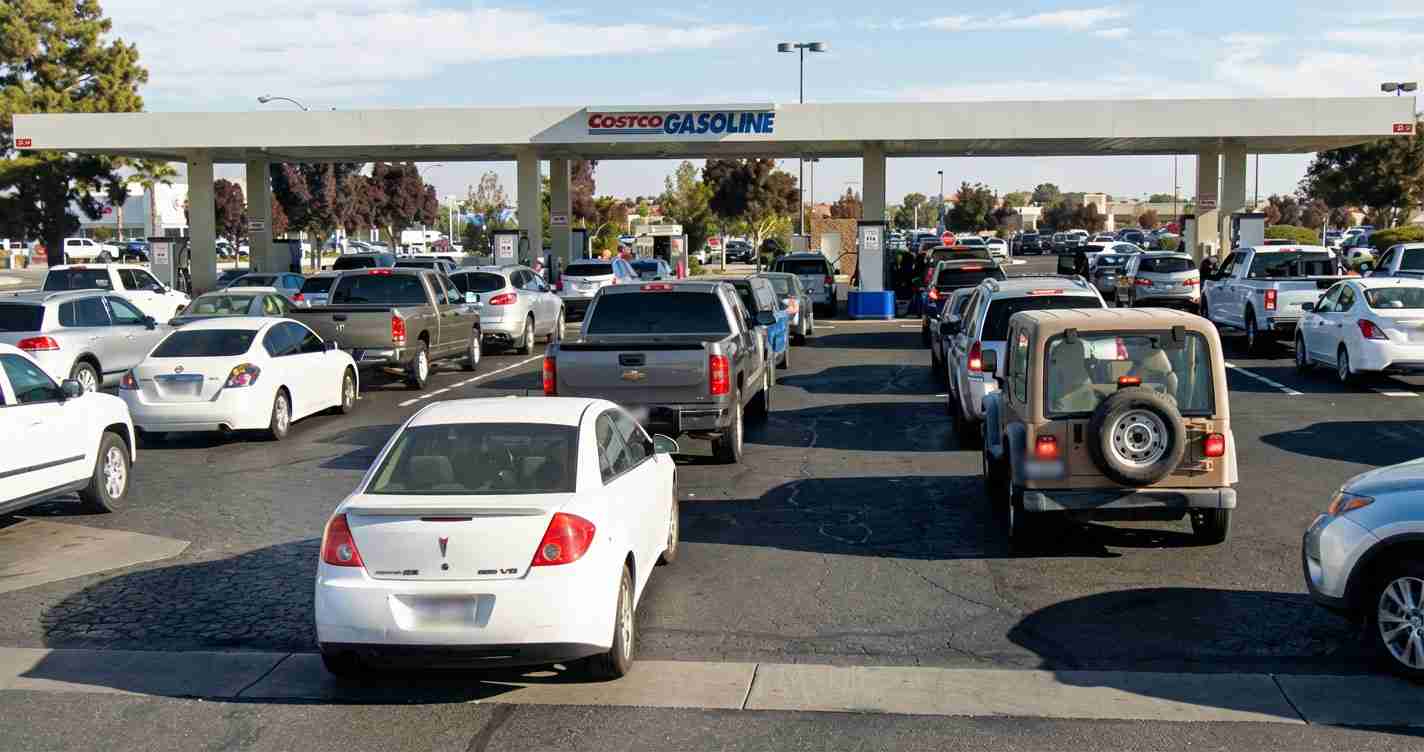
Costco quietly increased the in-house gas reward on the Costco Anywhere Visa Card by Citi to 5% at Costco-owned gas pumps, up from the prior 4%. The move was made without a large public announcement but is reflected in public card terms and industry reporting.
Citi’s published benefits confirm the rewards tiers, while reporting from Fox Business flagged the change. Card terms and analysts, including NerdWallet, align on the practical effects.
Financial impact for cardholders
For members who fill up primarily at Costco, the boost is straightforward: the combined $7,000 annual cap remains, but at 5% that now yields up to $350 back per year (previous cap payout was $280 at 4%). After the $7,000 threshold, gas and EV purchases drop to 1% cash back.
Tip: If you expect to exceed the $7,000 limit, consider pairing the Costco Visa with a flat-rate cash-back card (1.5%–2%) for post-cap purchases.
How the rewards work
- 5% cash back: Gas purchased at Costco pumps only, up to the $7,000 combined annual cap (Fox Business).
- 4% cash back: Eligible non-Costco gas and EV charging, counting toward the same $7,000 cap (Citi).
- 3% cash back: Restaurants and eligible travel (including Costco Travel), with no cap (Citi).
- 2% cash back: Costco and Costco.com purchases (Citi).
- 1% cash back: All other purchases, and gas once the $7,000 combined cap is exceeded (NerdWallet).
Rewards are tallied and issued annually as a certificate after the February billing cycle; certificates can be redeemed at Costco warehouses, and certificates of $500 or greater can be direct-deposited since 2022 (Fox Business; NerdWallet).
What Citi and Costco say
Citi confirms the published rewards structure and emphasizes the card’s fuel and other category rewards. Reporters attempted to reach Costco for comment; public terms from Citi and reporting such as Fox Business reflect the change.
How to maximize Costco Visa gas rewards
- Fill up at Costco pumps when possible to capture the 5% rate.
- Track combined gas and EV charging spending to avoid unexpectedly hitting the $7,000 cap.
- After the cap, shift purchases to a higher flat-rate card (1.5%–2%) to avoid the 1% fallback (NerdWallet).
- Remember an active Costco membership is required to hold the card (membership starts at roughly $65/year).
How this stacks up against other cards
The upgraded 5% at Costco pumps keeps the Costco Anywhere Visa competitive for shoppers who already use Costco and spend heavily on fuel, dining, or travel. Rival co-branded cards may offer similar high percentages but typically remain limited to a specific retailer’s ecosystem. The new 5% better matches some gas-focused offers, but the $7,000 cap and 1% fallback mean cardholders should plan for spending above the limit (NerdWallet).
Strategic and business implications
Industry observers see the move as a low-cost incentive to increase card usage and loyalty among Costco’s ~80+ million members and to nudge customers toward on-site fueling. With ~90% membership renewal rates, a modest reward lift can deepen engagement without a major marketing push (Fox Business).
Implications for California drivers
California motorists may see meaningful benefits because of higher-than-average fuel prices and longer commute distances. Households buying most fuel at Costco pumps could capture up to $350 in annual cash back under the 5% rate at the $7,000 cap.
Behavioral: The 5% incentive may shift fueling habits toward Costco stations, increasing warehouse foot traffic and potential in-store sales in suburban and exurban markets where Costco gas stations are common.
Equity: The benefit mainly helps members with convenient access to Costco gas stations. Urban residents without nearby Costco locations, transit-reliant households, and EV drivers (since EV charging at Costco remains at 4%) may see limited upside (Citi).
Practical steps for Californians: Evaluate your annual fuel spend and where you typically buy gas. If most fueling occurs at Costco pumps, the card is likely more valuable. If spending is fragmented across stations or EV charging, do the math: 4% counts toward the same $7,000 cap but only on-pump gas at Costco gets 5%. Consider pairing cards to optimize returns.
Sources and further reading
- Fox Business: “Costco quietly boosts gas rewards for branded credit card holders to 5% cash back.”
- Citi: Costco Citi Card — gas benefits and terms.
- NerdWallet: “Make the most of the Costco Anywhere Visa.”
- MoneyTalksNews: Coverage of Costco card gas rewards.
Reporting and analysis are based on company terms and industry coverage from the above sources. Times Media Service.