Austin anti-ICE protest clash: Police on bikes charge crowd near S. Congress; pepper balls used, multiple detained
A downtown Austin anti-ICE protest over the shooting of Renee Nicole Good escalated Saturday night as officers fired pepper balls and bicycle-mounted police charged crowds near South Congress and E 6th, resulting in multiple detentions and disputed accounts of force.
- Location: Confrontations occurred at South Congress Avenue and East 6th Street after a march from the J.J. Pickle Federal Building.
- Tactics: Law enforcement used nonlethal rounds described as pepper balls and bicycle units moved into the crowd, per local reporting (News 4 San Antonio; CBS Austin).
- Arrests: Counts vary — organizers reported at least seven arrests, while the Austin Police Department initially reported at least five detentions and local TV noted four during a bicycle surge (CBS Austin; KUT; News 4 San Antonio).
What happened
Protesters gathered downtown for an “End ICE Terror” rally, also called “ICE Out of ATX,” assembling near the J.J. Pickle Federal Building. The crowd marched through downtown streets, returned to the federal building, and at times blocked traffic in front of the building and later at the intersection of South Congress and East 6th (CBS Austin; Fox San Antonio).
Video shown on local stations captured tense moments as police followed the moving crowd. Some protesters burned flags and threw shoes with red paint at a sign bearing former President Donald Trump’s name outside the federal building. Organizers emphasized the protests were focused on deaths in ICE custody and the fatal shooting of Renee Nicole Good (News 4 San Antonio; Fox San Antonio).
Police response and tactics
Law enforcement presence included Austin Police Department officers and Texas Department of Public Safety troopers. Multiple outlets and witnesses described the use of nonlethal rounds — identified as pepper balls or pepper spray pellets — though APD said it was not immediately clear which agency fired specific rounds (CBS Austin; KUT).
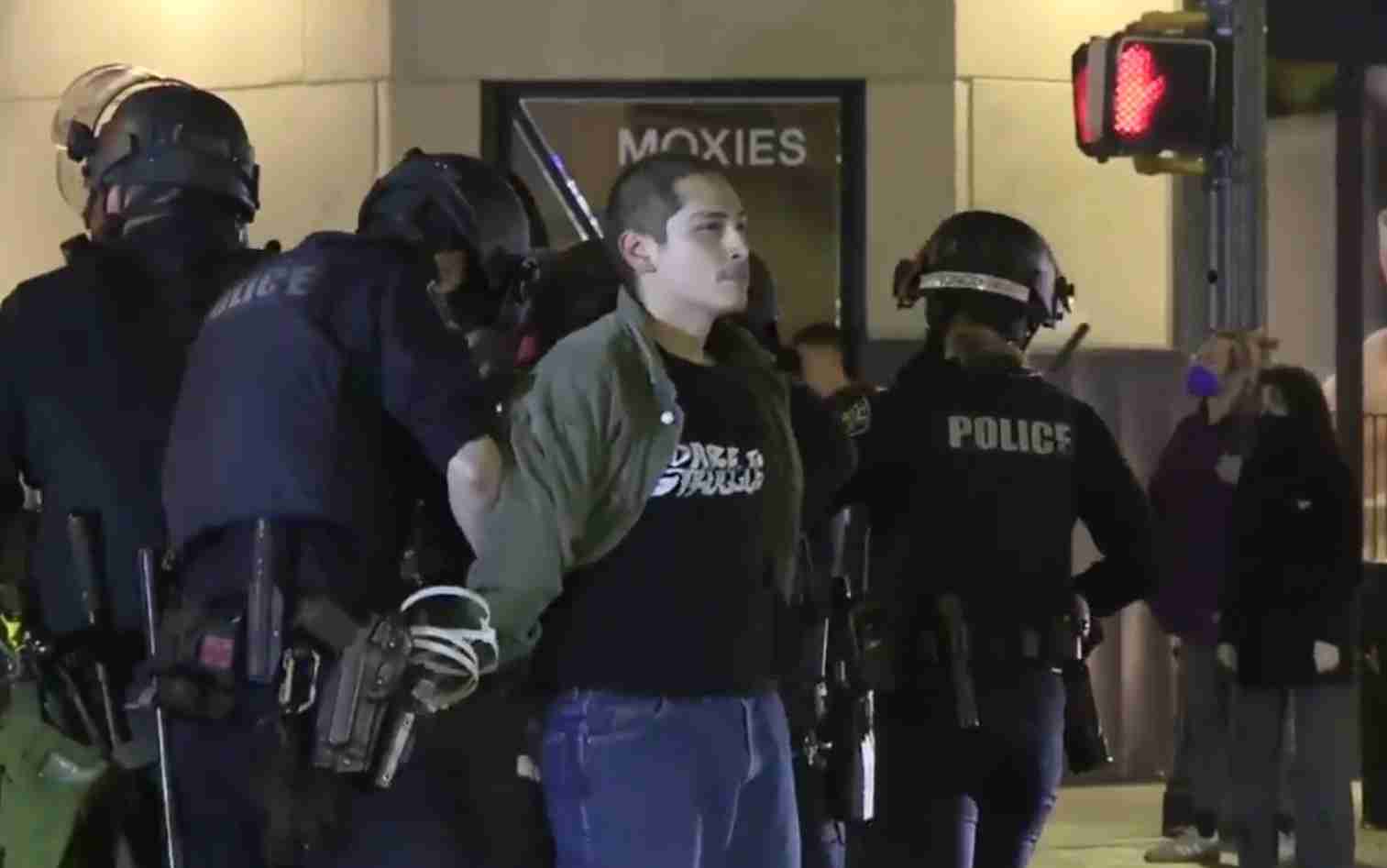
After protesters blocked the intersection for roughly 10 minutes, officers on bicycles moved into the crowd. Video from local stations shows bicycle units and officers in riot gear pushing into demonstrators and detaining several people. Witnesses and organizers described the bicycle moves as a “charge,” while police said their actions were intended to clear the roadway and restore public safety (CBS Austin; News 4 San Antonio; Fox News video).
Arrests and disputed counts
Accounts of detentions vary. Activist group Dare to Struggle Austin reported at least seven arrests, including one person allegedly detained while walking to their car. APD told KUT that at least five people were arrested and confirmed pepper balls were used; local TV reported four specific detentions during the bicycle charge at Congress and E 6th. APD said it would release more precise numbers after review (CBS Austin; KUT; News 4 San Antonio).
Organizers accused police of excessive force, citing pepper rounds and aggressive bicycle moves. Law enforcement countered that actions were necessary to prevent harm and keep roadways open; which agency fired specific rounds or made particular arrests remained unclear in initial APD statements (CBS Austin).
Official reactions and political framing
Texas Gov. Greg Abbott commented publicly, contrasting the Austin events with unrest elsewhere and asserting that the Texas Department of Public Safety would not tolerate defiant protesters. Abbott stated law enforcement has a right to defend itself and emphasized backing state officers (CBS Austin; Fox San Antonio).
Lt. Chris Olivarez of DPS posted that DPS “supports and respects the public’s First Amendment right to peacefully assemble,” but added that “violence, threats … obstruction of roadways, and damage to property will not be tolerated.” (CBS Austin).
Competing narratives
Activists described the night as a harsh crackdown intended to silence dissent over deaths in ICE custody and the killing of Renee Good. They pointed to tear-inducing rounds and bicycle charges as excessive (CBS Austin).
Law enforcement and officials said the response sought to preserve public safety and stop unlawful behavior such as blocking traffic and property damage. Reporting showed a mix of peaceful protest and disruptive acts, from marches and speeches to flag burnings (Fox San Antonio; News 4 San Antonio).
Broader context in Austin
The clash was part of several days of anti-ICE demonstrations in Austin, including a Friday night protest at the Texas Capitol and a morning rally at Austin City Hall that drew roughly 400 people. Friday’s Capitol event was largely peaceful though DPS troopers made at least one criminal trespass arrest in a separate incident (KUT; FOX 7 Austin).
Local reporting and video consistently noted the anti-ICE focus tied to the Renee Good case, the use of pepper rounds by law enforcement, and multiple detentions after police moved into crowds. Precise numbers and responsibility for specific actions remained under review (CBS Austin; News 4 San Antonio; KUT).
Implications for California
Economic impact: Large-scale protests and confrontations can ripple beyond Texas. California cities with active downtowns—San Francisco, Los Angeles, San Diego—rely on tourism and evening commerce; similar events that block streets or prompt heavy policing can cause lost sales and higher security costs.
Political consequences: The incident may deepen debates in California over balancing public safety and civil liberties. Officials could face pressure from law enforcement unions to endorse tougher crowd-control tactics while civil-rights groups may push for oversight.
Social and cultural effects: News of the Renee Good protests and police response may spur solidarity demonstrations, increase tensions between activists and police, and motivate community-led documentation of police behavior. The clash highlights tensions between protecting speech and ensuring safe streets.
Practical applications for residents
- Stay alert to local advisories and expect downtown traffic delays or transit detours if protests are announced.
- Businesses in central districts should review emergency plans, communicate with customers, and monitor official city channels and local media.
- Civic groups and legal observers may consider documenting events and tracking after-action reviews for accountability.
Legal and oversight considerations
California agencies and civil-rights groups will likely watch how investigations and after-action reviews in Austin proceed. Key questions include which agency fired pepper rounds, whether tactics matched training and policy, and how many people were lawfully arrested. Independent reviews may be requested where force is alleged.
Sources
Reporting compiled from local and regional outlets and public statements by authorities.