HESPERIA, CALIF., June 7 (Our Hesperia) — By Eric Swanson
A benchmark from Rome-based Translated suggests its AI translation system could reach human-produced translation quality by the end of the decade or sooner, Popular Mechanics reported, adding to debate over singularity forecasts.
The finding is based on a metric called Time to Edit, or TTE. It measures how long professional human editors need to correct AI-generated translations compared with translations produced by people.
Translated analyzed more than 2 billion post-edits from 2014 to 2022. The company said a human translator needs about one second per word to edit another human translator’s work.
By comparison, professional editors took about 3.5 seconds per word in 2015 to check a machine-translated suggestion, according to the report. The article said the figure is now about 2 seconds per word, though the research brief did not specify the exact measurement date for “today.”
Translated’s AI could reach human-produced translation quality by the end of the decade, or possibly sooner. From 2026, that would put the milestone roughly four years away.
The benchmark does not show that a general artificial intelligence system has arrived. It tracks a narrower task: machine translation quality as measured by editing time.
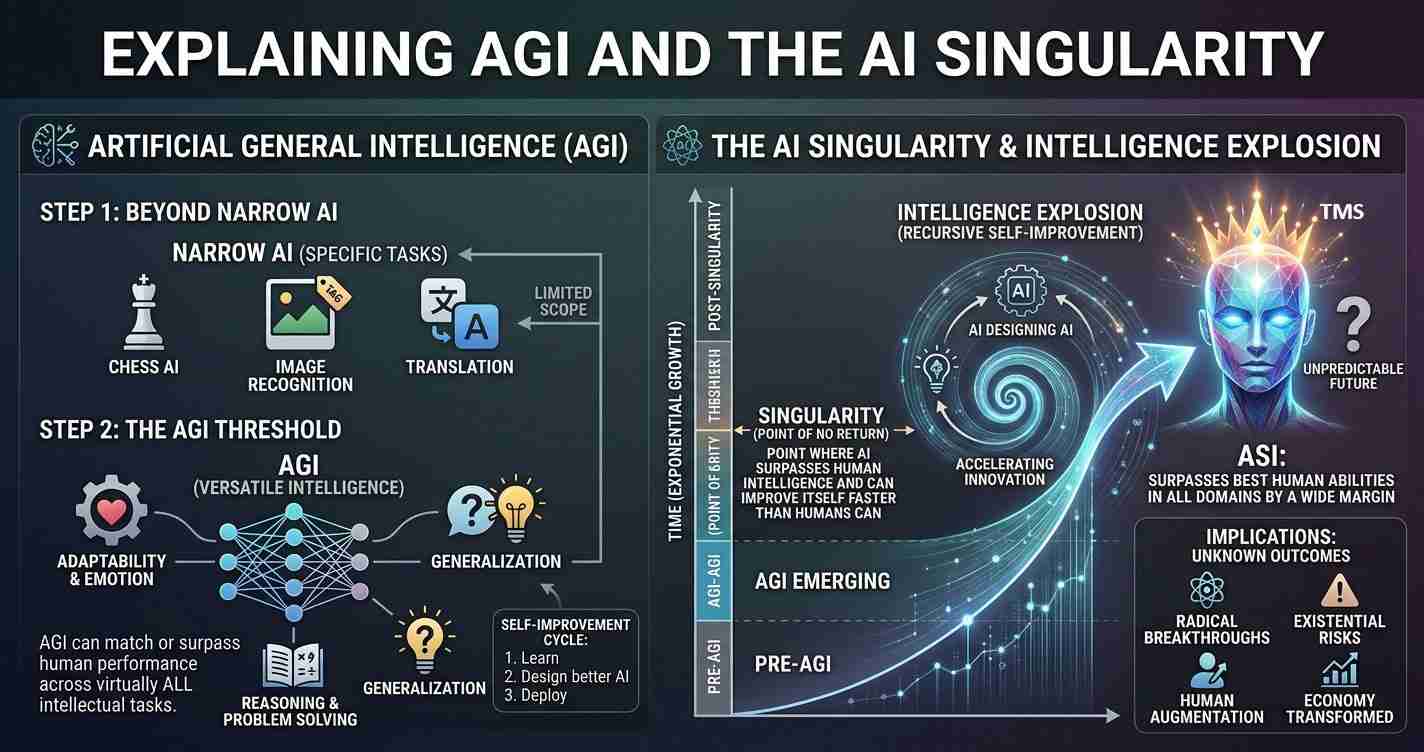
The broader idea at issue is the technological singularity, often described as a point when artificial intelligence surpasses human control and rapidly transforms society. Popular Mechanics has reported that one trend points to that possibility within about five years, but the evidence cited centers on translation performance rather than all human reasoning.
Other forecasts remain much later. that computer scientist and futurist Ray Kurzweil has long predicted human-level AI around 2029 and the singularity in 2045. The report said Kurzweil stated in a TED Talk that he was “sticking with [his] five years” prediction for human-level AI.
Predictions have varied for decades. Wikipedia’s summary of the technological singularity lists earlier forecasts by I.J. Good, Hans Moravec and Vernor Vinge, including several dates that have already passed or windows that are still open.
The same summary says a review of surveys from the previous 15 years found most scientists and industry experts agreed artificial general intelligence, described there as below the level of a full singularity, would occur by 2100. It also cites AIMultiple as reporting current AI researcher surveys that place AGI around 2040.
ETC Journal posts from 2025 offered informal “guesstimates” that generally placed a likely singularity window in the 2030s or 2040s, while noting uncertainty and more aggressive near-term forecasts.
The Translated metric adds a concrete measure to that debate, but it remains a product-specific translation benchmark rather than proof that artificial intelligence has reached broader human-level capability.